
Strength in a time that mistakes weakness for wisdom
The Master’s most enduring lessons rarely came during formal training. They arrived in quieter moments, usually at his kitchen table while a pot of tea cooled between us. He often taught through objects rather than explanations, placing something between us and letting its meaning rise on its own.
One afternoon he set down a plain wooden cane. Without a word, he twisted the handle and revealed a long, narrow blade hidden inside. A Japanese katana disguised as something fragile. The contrast was deliberate.
He mentioned only that there had been a time in Japan when people were forbidden to carry swords in public. That was how he taught. A doorway instead of a map. Later I learned the history. During the early Meiji period the government dismantled the samurai class and banned the wearing of swords. A modern nation demanded a new identity, one that pretended danger had passed and the kind of people who made force necessary no longer existed. Many former samurai went along with this vision on the surface, but inwardly they did not believe the story. They carried shikomizue instead. Their swords were still present, just hidden in canes. Compliance above, truth below. Outward softness, inner readiness.
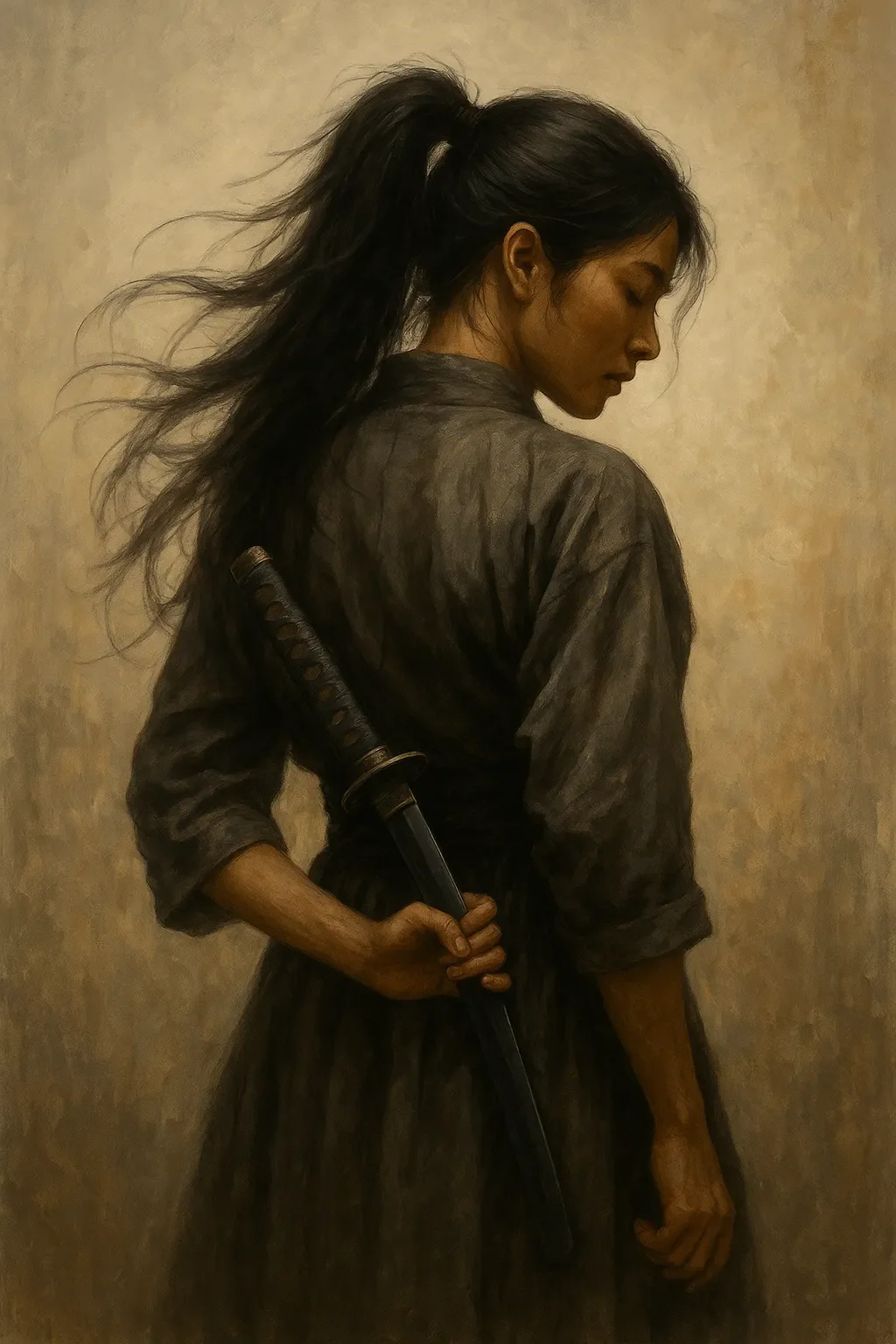
The image stayed with me. A blade kept out of sight. Strength carried quietly. Capability held in reserve. The same pattern is alive today in a different form. Our culture often treats harmlessness as virtue and encourages people to present themselves without any edge at all. But harmlessness is not goodness. It is simply the absence of capacity. When someone refuses their own force, it does not disappear. It slips underground and returns as anxiety, resentment, avoidance, or a reluctance to shoulder responsibility. A person who denies their own edge becomes fragile, and fragile things do not hold up well under pressure.
These are the people who move through life without a blade. They often seem kind or accommodating, but when difficulty arrives, they collapse inward and call the collapse wisdom. Their intentions may be good, yet their structure cannot support the weight that life inevitably brings. And instead of seeking quiet counsel from those who could actually help, they turn their weakness into something to display. They share every fracture publicly, hoping praise will make it strength. But weakness is not virtue, and broadcasting it does not make anyone steadier.
At the other extreme are those who never set their sword down. Their blade is always drawn. They rely on force because it is the only tool they trust. Their aggression is not strength. It is insecurity clothed in dominance. They cannot put the sword away because without it they would feel exposed. Their posture is simply another shape of instability, different only in form from the fragility they disdain in others.
Between these extremes lives something rare. You recognize it instantly even if you cannot explain why. A person whose sword is not visible yet unmistakably present. Their calm has depth. Their restraint has shape. Nothing inside them has been disowned, and nothing rules them from the shadows. What could have become aggression has been refined. What could have become fragility has been strengthened. They can act when action is needed, yet they have nothing to prove and no need to be feared. Their strength is felt rather than shown, and because it is integrated, it does not spill into every situation. It rests in reserve, steady and available, like the blade in the cane.
Taoism describes this quality with simple clarity. The brave soldier is not violent. The skilled fighter does not lose control. The great conqueror avoids battles that do not matter. The leader with real authority does not place himself above others. This is harmony. Power that fits the moment. Capability shaped by proportion rather than impulse.
This is the one who carries the hidden sword. Strength without display. Capability without noise. A presence that steadies more than it threatens. The blade stays in the cane not out of fear, but out of understanding. The Master never explained this lesson directly. He trusted the object to do the work.
In time I understood the lesson. A person should be strong enough to act when action is required and centered enough to wait when stillness is wiser. Someone who carries their edge naturally does not use it for identity or dominance. It becomes part of who they are. Quiet. Integrated. Available. People feel safe around them not because they are harmless, but because they are grounded. Their strength lives in reserve, and for that reason it rarely needs to be drawn.
That is the sword. Clarity. Readiness. Responsibility. A steady presence in a noisy world. The older I get, the more I understand why he kept a blade hidden inside a cane. Real mastery is not something you perform. It is something you carry. Quietly. Unseen. Until life asks for it.
Dana Therrien